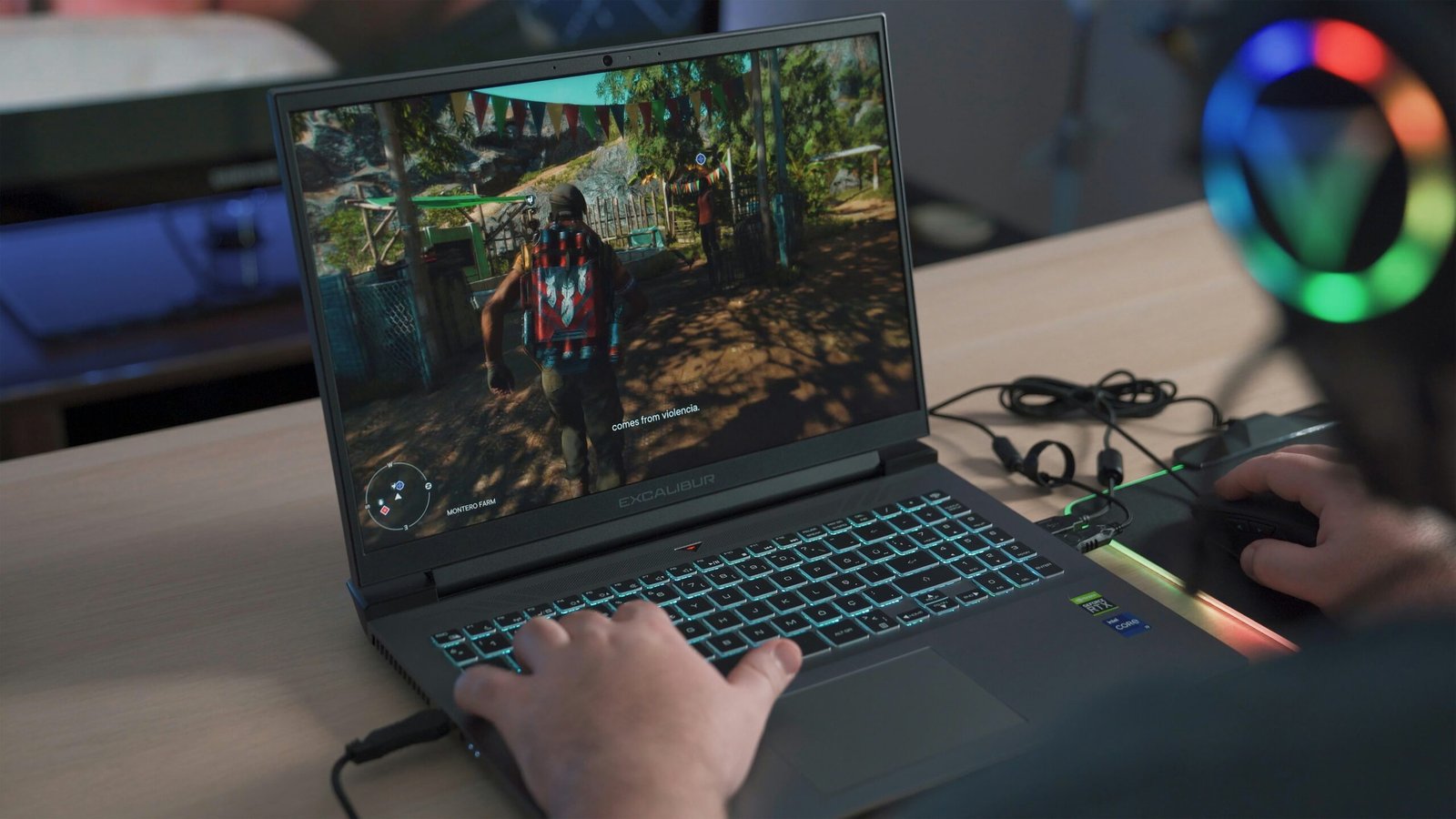
So, you’re looking to snag one of the best gaming laptops for 2026? It’s a big question, and the good news is, the landscape has some really solid options this year, whether you’re after raw power, portability, or something that won’t completely empty your wallet. We’ve sifted through the specs, benchmarks, and real-world performance to give you a practical rundown of what’s worth considering.
The Top Contenders for Pure Gaming Power
When you just want to crank every setting to ultra and not worry about frame drops, a few laptops consistently emerge at the top. These are the machines built for the most demanding AAA titles and for those who truly value peak graphical fidelity.
HP Omen Max 16: The All-Rounder Champ
It’s hard to ignore the HP Omen Max 16 when talking about the best in 2026. It consistently hits the top of most “best of” lists for a reason.
- The Engine Under the Hood: This laptop is packing the latest Intel Core Ultra 9 275HX, which is a beast.paired with NVIDIA’s RTX 5080 or even the RTX 5090 graphics cards. These GPUs aren’t just fancy numbers; they’re pushing out serious frames, often at full 175W TGP (Total Graphics Power), meaning maximum performance from the card.
- Gaming Performance: Expect it to handle pretty much any modern AAA game with ease, often at high refresh rates and resolutions. Games like Cyberpunk 2077 or Alan Wake 2 will look stunning and run smoothly.
- Build and Features: Beyond the raw power, HP has really refined the Omen chassis. It’s sleek and doesn’t scream “gamer” in a way that might make it awkward to use outside of your gaming den, though it’s definitely substantial. Crucially, it offers upgradable RAM and storage, which is a practical plus for longevity.
- Value Proposition: While not the cheapest, the Omen Max 16 often sees frequent sales. It strikes a good balance between premium features and accessible pricing when those deals pop up.
Razer Blade 18: The Premium Performance King
If budget is less of a concern and you’re looking for an uncompromising, premium experience, the Razer Blade 18 is a serious contender. Tom’s Hardware has it spotlighted as best overall, and it’s easy to see why.
- Chart-Topping Performance: This machine is built to win benchmarks. It’s equipped with top-tier components, ensuring that you’re getting some of the fastest gaming performance available in a laptop form factor.
- Dual-Mode Display: One of its standout features is the dual-mode screen. This essentially gives you flexibility, allowing you to switch between different refresh rate and resolution profiles to suit your needs, whether it’s high-refresh for competitive shooters or a more balanced mode for general use.
- Build Quality: Razer is known for its premium, CNC aluminum unibody construction, and the Blade 18 is no exception. It feels incredibly solid and well-built, a definite step up from many plastic-heavy laptops.
- The Price Tag: Be prepared – the premium experience comes at a premium price, often hovering around $5,200. This is definitely an investment.
- Real-World Graphics: Benchmarks in demanding games like Cyberpunk 2077 show it consistently in the top tier, proving its mettle with the latest, most graphically intensive titles.
Excellent Performance in More Portable Packages
You don’t always need an 18-inch behemoth to get great gaming performance. Several manufacturers are delivering impressive power in smaller, more manageable chassis, making them ideal for those who game on the go or want something less intrusive in their workspace.
Asus ROG Zephyrus G14/G16: The Versatile Ultrabooks
Asus has carved out a niche with its Zephyrus line, offering a blend of performance and portability that’s hard to beat.
- Zephyrus G14 (2024): This model continues to be a strong performer, especially in its 14-inch form factor. It scores highly not just in gaming but also in multimedia tasks, making it a versatile machine for creators and gamers alike. It’s a great option if you want something that can handle demanding tasks without the bulk.
- Zephyrus G16 Refresh (CES): The G16 saw a significant update, and it’s noteworthy. Key highlights include dual 16-inch 120Hz OLED touchscreens, which offer absolutely stunning visuals with vibrant colors and deep blacks, perfect for both gaming and content consumption. Under the hood, it features the Intel 386H CPU and can be configured with an RTX 5090 pushing 160W TGP. This combination makes it a powerhouse in a relatively sleek package.
- OLED Brilliance: The OLED displays are a significant upgrade for visual immersion. The contrast and color accuracy are outstanding, really bringing games and movies to life.
Asus TUF Gaming A14: The 14-Inch Champion for the Road
If you’re specifically looking for a 14-inch laptop that feels premium and offers good battery life for non-gaming activities, the Asus TUF Gaming A14 is a strong contender.
- Premium Feel: Despite being part of the TUF line, which historically leans towards durability and value, the A14 manages to deliver a more premium feel than some might expect. The build quality is solid, and it doesn’t feel cheap.
- Portable Gaming Power: It often features a clever combination of AMD and Nvidia components. This allows for decent portable gaming performance without sacrificing too much in other areas like battery life when you’re not plugged in and gaming.
- Battery Life: For daily use, web browsing, and productivity, the TUF A14 can often offer better battery life than its more power-hungry brethren, making it a more practical choice for students or frequent travelers.
Budget-Friendly Gaming: Performance Without the Premium Price
The idea that you need to spend thousands to get a decent gaming laptop is often a misconception. There are solid options available that can handle modern games at good settings without breaking the bank.
MSI Katana 15 HX: The Under $1,000 Powerhouse
For those on a tighter budget, the MSI Katana 15 HX is a standout choice for solid 1080p gaming.
- Affordable Performance: This laptop typically includes an Intel Core i7 processor and an NVIDIA RTX 5050 GPU. This combination is more than capable of delivering a good experience in most popular games at 1080p resolution, often with medium to high settings, especially with DLSS enabled.
- Value Proposition: The key here is value. You’re getting a modern GPU and CPU at a price point often under $1,000, which is fantastic for entry-level gaming or for those who don’t need to play the absolute latest releases on ultra settings.
- Considerations: It’s important to note that to hit this price point, some compromises are usually made. The display might not be the brightest, and while it often includes RGB lighting, the screen quality itself might be a step down from more expensive models. However, for pure gaming performance at this price, it’s hard to beat.
Other Notable Options Worth Checking Out
The gaming laptop market is diverse, and several other models deserve a mention for their unique strengths or specific configurations that might appeal to certain users.
Acer Nitro V 16: A Solid Nvidia Alternative
The Acer Nitro V 16 is another option that pops up, particularly if you’re looking for strong NVIDIA GPU performance.
- Nvidia Focus: It often comes equipped with NVIDIA GPUs, meaning you get access to features like DLSS (Deep Learning Super Sampling), which can significantly boost frame rates in supported titles.
- Availability Issues: A point to remember is that this model can sometimes suffer from availability issues, making it harder to find depending on your region and the time of year.
Lenovo Legion 7A Series: AMD’s Powerhouse Combination
Lenovo’s Legion series is always a strong contender, and the 7A model brings an interesting AMD/Nvidia mix.
- AMD Processor Power: It’s often configured with AMD’s top-tier processors, like the AMD Max Plus 392, paired with NVIDIA GPUs such as the RTX 5060. This combination can offer excellent CPU performance for multitasking and emulation, alongside capable graphics for gaming.
MSI Raider 16: For Display Enthusiasts and DIY Upgraders
The MSI Raider 16 offers a couple of compelling features for those who value visual quality and the ability to tinker.
- OLED Option: One of its significant selling points can be an optional OLED display. This means you’re getting top-tier visual fidelity with incredible contrast and color.
- Toolless Upgrades: MSI has also been pushing for more user-friendly upgrades, with some Raider models featuring toolless access for RAM and storage. This makes it much easier to upgrade your system down the line without needing special tools.
Razer Blade 16: The RTX 5090 Competitor
If the Blade 18 is a bit too large and you still want RTX 5090 power, the Razer Blade 16 is the answer.
- Compact Powerhouse: It packs the same high-end RTX 5090 GPU as its larger sibling, but in a more manageable 16-inch chassis. This makes it a more portable option for those who demand the absolute best graphics without wanting a desktop replacement.
- Premium Build: Like all Razer Blades, you’re getting that signature premium build quality, which justifies its higher price point for many.
What to Look for Beyond the Top Specs
While specific models and their components are crucial, a few general considerations can help you make the best choice for your needs.
Display Refresh Rate and Resolution
- 1080p vs. 1440p: For most gamers, 1080p (Full HD) is still a perfectly good resolution, especially on 14-inch to 16-inch screens. It’s easier for GPUs to push high frame rates at this resolution, leading to smoother gameplay. If you’re aiming for 1440p (QHD), you’ll need a more powerful GPU, like an RTX 5070 or higher, to see consistent benefit.
- High Refresh Rates: This is key for a smooth gaming experience. Look for at least 120Hz, but 144Hz or even higher is becoming more common and offers a noticeable difference, particularly in fast-paced games like shooters.
- OLED vs. IPS: OLED displays offer incredible contrast and color accuracy, making games look incredibly vibrant. IPS panels are still excellent, with good color reproduction and wide viewing angles, and are often found in more budget-friendly options.
Cooling and Thermals
- The Silent Killer: A powerful CPU and GPU will generate heat. How well a laptop manages this heat is critical. Laptops with inadequate cooling will throttle their performance to prevent overheating, meaning you won’t get the full power you paid for. Look for reviews that specifically mention thermal performance under heavy load.
- Fan Noise: Higher-end gaming laptops often have more robust cooling systems with multiple fans. Be aware that while they keep temperatures down, they can also be noisy during intense gaming sessions. Some models offer different fan profiles in their software to balance noise and performance.
Keyboard and Trackpad Quality
- Input Matters: You’ll be spending a lot of time with the keyboard and trackpad. For gaming, a responsive keyboard with good key travel and anti-ghosting is important. For general use, a comfortable trackpad makes navigation smoother.
- Peripherals: Many gamers will use an external mouse anyway, but if you plan to game without one occasionally, the trackpad’s quality is more important.
Port Selection
- Connectivity is Key: Consider what peripherals you’ll be connecting. Ensure the laptop has enough USB-A and USB-C ports, HDMI out for external monitors, and an Ethernet port for stable online gaming. Thunderbolt support on USB-C ports is also a plus for faster data transfer and external device compatibility.
Selecting the right gaming laptop in 2026 involves weighing performance, portability, features, and budget. The options presented here offer a solid starting point, catering to a range of priorities and pocket sizes. Remember to check detailed reviews for specific benchmarks and real-world performance before making your final decision.
FAQs
1. What are the top gaming laptops in 2026?
In 2026, some of the top gaming laptops include models from brands like ASUS, MSI, Razer, Alienware, and Acer. These laptops are known for their powerful processors, high-quality graphics cards, and advanced cooling systems.
2. What are the key features to look for in a gaming laptop?
When choosing a gaming laptop, it’s important to consider the processor (CPU), graphics card (GPU), RAM, storage, display quality, and cooling system. Additionally, factors such as battery life, keyboard quality, and portability may also be important for some users.
3. What is the average price range for gaming laptops in 2026?
In 2026, the average price range for gaming laptops varies depending on the brand, specifications, and features. Generally, gaming laptops can range from $1000 to $3000 or more for high-end models with top-of-the-line components.
4. How do gaming laptops differ from regular laptops?
Gaming laptops are specifically designed to handle the demands of modern video games, with more powerful processors, dedicated graphics cards, and advanced cooling systems. They also often have higher refresh rate displays and customizable RGB lighting.
5. What advancements can be expected in gaming laptops in the near future?
In the near future, advancements in gaming laptops may include even more powerful processors and graphics cards, improved cooling solutions, higher refresh rate displays, and advancements in battery technology for longer gaming sessions on the go. Additionally, advancements in virtual reality (VR) and augmented reality (AR) capabilities may also be integrated into gaming laptops.